Impermanence: The Beauty of Decay, Death, and Transformation.

I know death is a hard topic to discuss. We tend to avoid it out of fear even though we logically know that everything is impermanent. I’m grateful for life and death. There can’t be one without the other. 

You and I will die. The Earth will die. Our Sun will die. Our Solar System will die. The Universe will die.

Well at least in our conventional sense of death….

The First Law of Thermodynamics states that energy can neither be created nor destroyed; energy can only be transferred or changed from one form to another.

If energy can neither be created nor destroyed then we are infinite. The matter that makes up our body has been around since the dawn of the Universe and it will live on for infinity after we die. On a cellular level, we are constantly transforming, with old cells dying and new cells being born every second.

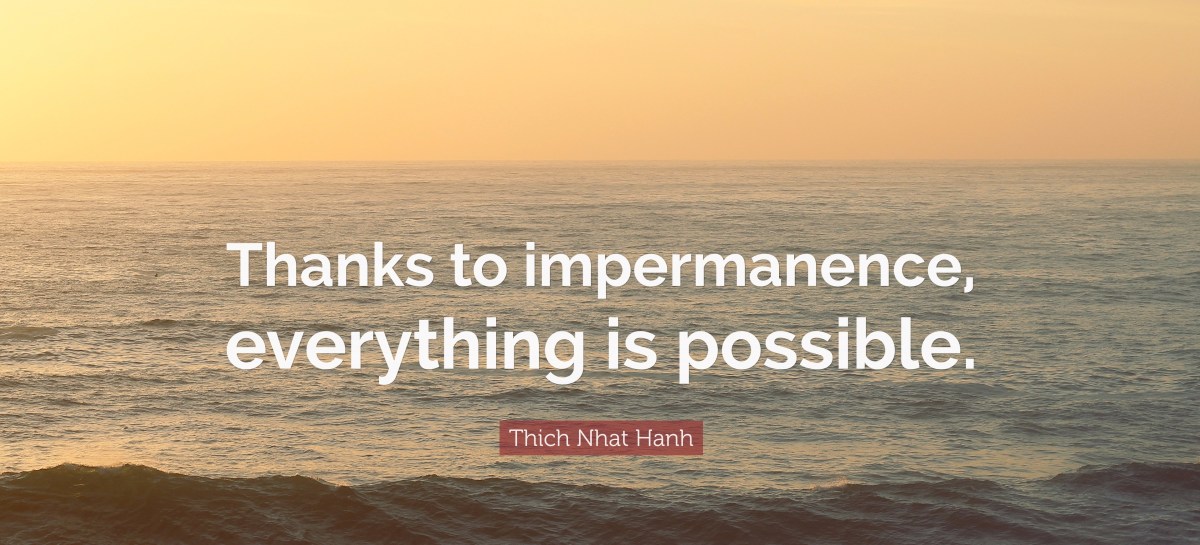
The Zen Master Thich Nhat Hanh and many other Buddhist teachers talk about the laws of Physics in their discussions about death, life, and impermanence. Impermanence is one of the key principles of Buddhism and many Buddhist’s meditate over their own death. Why not prepare for the inevitable? It’s one of the few things we are guaranteed.

Be grateful for death, without it we wouldn’t be alive. Just think of the approximately 108 Billion people who have lived and died on Earth. The Billions of Dinosaurs that had to die for us to eventually evolve into conscious species. A supernova (death of a star) creating the matter for our Sun, Earth, and Solar system to be created. Without the death of our ancestors, we would not be alive and our death will allow other humans to get a chance at life.

Without death, there is no life.

Thich Nhat Hanh’s teaching’s discussed that there is no birth or death, just transformation. You and I are a transformation of our parent’s DNA, and our bodies are a mixture of elements that have been transformed into a conscious human being. We are not full of human but full of elements like oxygen, carbon, and hydrogen.

Many of us walk around as if we live forever. We all logically know our own death but choose to ignore it. We assume that we will get old and deal with it then even though we could die any minute. This is all a delusion that is motivated by fear. If we fully embrace impermanence today we can live our life full of gratitude, love, and freedom. Without the fear of death, we can fully enjoy life. Freedom from the fear of death is a great feeling, one that I try to cultivate in my meditations.

I know this topic is hard to discuss and I thank you for reading this blog post. My intention is not to be sad or dark, but to bring light to the darkness. To change our perspective on death from one of fear to love and from anger to gratitude. 

With Aloha,

Johnny Hoffman

 

The Power of Meditation. 

From CEO’s to professional athletes, the practice of meditation is becoming more normalized in the United States. Meditation has also been extensively studied by neuroscientists who have found scientific proof that meditation can rewire the brain, making us more compassionate and loving people. Meditation isn’t going to make your life perfect. Think of it as a mental health exercise that can alleviate mental stress, anxiety, and depression. Adding it to a healthy diet and workout regiment for a healthy mind, body, and spirit. Our mind is like a puppy wandering towards every stimulus in the park, never truly focusing on the present moment. The goal of meditation isn’t to control our thoughts but to not allow our thoughts to control us.

In its most basic definition, meditation is allowing everything to exactly exist in its present state. Sounds easy right? It’s not, our mind loves wandering to the past, future, or how things should be but they are not. Meditation is about training the brain so you are not tormented by cravings, impulses, and the natural tendency for our mind to focus on the negative.

I discovered meditation when my ex-fiance and I broke up. My anxiety after the breakup was so bad that I was on the verge of a mental breakdown. My stomach was constantly in knots and my mind was in chaos. One day I researched the benefits of meditation and found out that it could help alleviate anxiety. After trial and error, I started meditating 10-60 minutes a day. I couldn’t believe how great I felt after my meditation. My anxiety & stress seemed to vanish and I felt more content with who I was in my entire life. Life has had its ups and downs since then but I can always find my peace while meditating. It helps me focus on the present, express gratitude, and show compassion to myself and others.

I invite you to try meditation for yourself. Find a meditation that works for you. Whether that’s a mindful walking meditation or sitting on a chair/cushion. The first step is to focus on your breath, which will center your body and mind. Whenever your mind wanders, you can bring it back to the present moment by focusing on the breath. With the power of Youtube, Google, and all the different applications like Calm or Headspace you can find your own path of meditation that works for you. Just remember, meditation won’t always be pleasurable just like working out or eating healthy isn’t always enjoyable. The benefits of meditation our felt when leaving the cushion. The benefits of compassion, love, forgiveness, and focus.

With Aloha,

Jonathan Hoffman

The Second Arrow of Suffering.

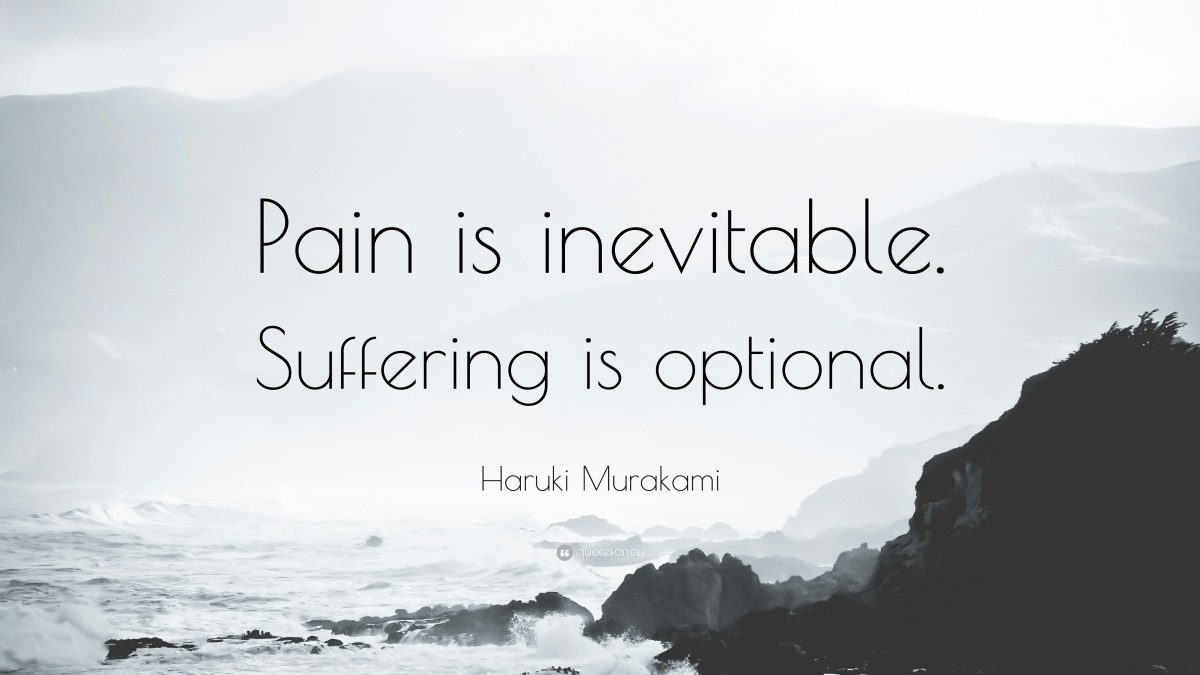
There is a simple Buddhist parable that I enjoy titled “The Second Arrow”. I really enjoy parables because they pack a ton of wisdom in a simple and easily understandable story. Imagine a warrior being shot with an arrow on the battle field. The warrior can’t avoid the pain that the arrow is causing; what they can control is how they react to the arrow. The reaction to the pain of the first arrow is the second arrow. 

“In life, we cannot always control the first arrow. However, the second arrow is our reaction to the first. And with this second arrow comes the possibility of choice.” -Buddha

The first arrow represents the inevitable pain that will be cast upon us throughout life. For example, this pain might be the death of a family member or the loss of a relationship. The second arrow is our reaction to the pain, which brings us the possibility of choice. I find that having a choice in my reaction to pain is both exciting and freeing! We can feel the pain but not react emotionally to it. Instead of complaining, wallowing, or fighting the pain we can accept the pain as impermanent and move on from it. In my experience, this change in mindset can allow us to live a more meaningful and content life. Life is 10% of what happens to us and 90% of how we react to it.


With Aloha,

Jonathan Hoffman