Distraction: How do we Stay Focused on What Really Matters?

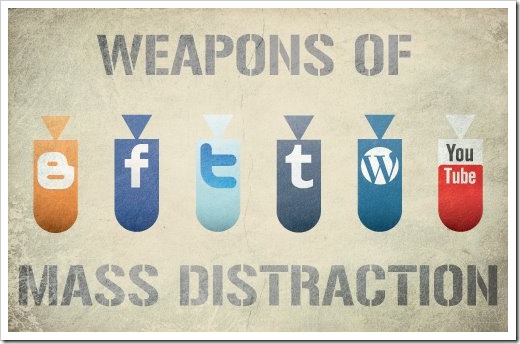
Welcome to the 21 Century! A time period defined by its distractions, whether that be social media, Netflix, YouTube, 24 hour News, virtual reality, or video games.

Humans have been distracting themselves since the beginning of recorded human history, whether that be Roman gladiators or Netflix. Distractions can benefit society, allow for people to relax and decompress from the daily stress of life. Distractions themselves are not the problem, it’s the amount of time consumed distracting oneself. We live in a time period where there is an unlimited amount of distraction and entertainment, which becomes addictive. The high from binge-watching Breaking Bad can feel so good at first, but after spending all day on the couch, we feel horrible. This concept is known as diminishing returns. Diminishing returns is when adding more of an activity actually decreasing the amount of return. For example, 1 alcoholic beverage might bring joy but 20 drinks could lead to alcohol poisoning, at some point consuming more alcohol led to an adverse effect. The phrase “Less Is More” seems fitting.

With freedom, comes responsibility. 

We have the freedom to spend most of our waking time on Netflix while only eating Butterfingers, Taco Bell, and Coors Light. I truly believe that we are blessed and cursed with this freedom. It is a blessing to live in a country where you can choose your own path, express yourself, and consume what you want without Government control. I’m very grateful for this freedom but with this freedom comes responsibility for us to regulate our habits and behaviors. I don’t think most of us have been taught self-control because our culture of consumerism frowns upon self-restraint and responsible living. The rise of Minimalism is a direct response to this culture of unsustainable consumption. We have to regulate our two most valuable commodities, time and attention. We only have a finite amount of time and attention so we must choose wisely how we spend it. It saddens me how much time I have spent on social, media, Netflix, and watching sports when I could have been contributing, growing, and spending time with people that I love.

It’s not about cutting out all these distractions, but regulated and deciding what brings value to your life. Write down what your activities are throughout the week and you will how much time you spend distraction yourself. Here is an example.

Activities Per Week

Current                              Vision

Netflix  10 hours              Netflix 2 hours

Youtube 5 hours               YouTube 1 hour

Facebook 4 hours         Facebook 2 hours

Football 6 hours           Football  4 hours

Family 3 hours             Family 12hours

Passions 1 hour           Passions  10 hours

It’s not about cutting everything our life but regulating the distractions so they don’t make up a majority of our free time. What we are passionate about will thrive if we cut out the excess of distractions. Without the endless distractions, we can spend more time connecting with our family, friends, and significant others. Our life will have more meaning and less emptiness.

We all have the same 24 hours, let’s make the best use of it.

With Aloha,

Johnny Hoffman


Authentic Living: Are your Actions Inline with your Values?

Aloha!

In this week’s blog post I want to discuss values, authenticity, and how it can benefit you and the world around us. Authentic living is trending in the mindfulness community because many of us are awakening to the unauthentic world around us. A world where corporations, politicians, and celebrities say one thing but their actions show their true intentions. Let’s not blame them though, we are the problem but also the solution. I’m 27 years old and most of my adult life I have lived an unauthentic life. I portrayed myself as a man with good values but my actions showed otherwise. An unauthentic life caused great anxiety, stress, and fed my gambling addiction as well as many unhealthy habits. Here are some of the unskillful actions that I have done in life.

  • Cheated, lied, and misled my ex-fiance.
  • Lied to my mom, dad, brother, best friend, and to myself.
  • Littered and mistreated the environment.
  • Treated women like sex-objects.
  • Lost thousands of dollars gambling.
  • Abused my body with fast food, processed meat, and an absurd amount of alcohol.

There are no excuses for my unauthentic and unskillful actions. I am sorry. I will do better.

I know now that my actions matter. Living authentically is living in line with your values. The first step is to find out what your values are and write them down. In my early 20’s I didn’t even know my values which led to many unskillful actions. I might have told you that I valued my health but then go drink 10 Coors lights and eat a whole meat lovers pizza. With the help of Author Timber Hawkeye and “The Minimalists”, I have established what my values are. The next step is to cross-reference my actions with my values and see if they are in line. Here are my foundational values, the ones that define who I am.

  • Love
  • Compassion
  • Growth
  • Contribution
  • Relationships
  • Health

Authentic living isn’t about living a perfect life in which all your actions are perfectly in line with your values. That’s a sure way to live a very discontented life. Authentic living is about mindfully looking at your life and intentionally changing it to who you want to become. You would be surprised how small steps in the right direction can lead to astonishing results. Leading to a less stressed and more content you.

I wanted to end this post with an example of how I live a more authentic life. Over the last six months, I have slowly transitioned to a plant-based diet with a small amount of fish and dairy. I cut out meat because it’s not in-line with my values of compassion and health. Factory farms are disturbing and cause great suffering to animals, workers, and the environment. I have compassion for these animals as living beings who don’t deserve to suffer. I know that the dairy industry and fishing can cause suffering as well, hence why I’m slowly cutting down my consumption to soon become a vegan. I cross-reference every action with my values and try my best to act accordingly. From the clothes I wear, the bed I sleep on, my toothpaste, and the food I put in my body. I feel less anxious and more at peace when my actions are in-line with my values. By changing your actions you are in fact changing the world.

“Happiness is when what you think, what you say, and what you do are in harmony.”

-Mahatma Gandhi

With Aloha,

Jonathan Hoffman


Less is More: My Journey to Minimalism. 

When I was a child, I always enjoyed my father’s house. He didn’t clutter his living space with tons of trinkets and photos, instead he had a few golf paintings and only the essential. I didn’t realize it then, but it was the first indicator that I was in fact a minimalist. My parents divorced when I was young so I spent every other weekend with my dad. He was a minimalist before it was cool, before it was labeled as a fringe group which is slowly turning into a more mainstream philosophy.

Before the 1970’s, almost everyone was a minimalist. It wasn’t until manufacturing went to China, India, etc that material goods became so cheap and available. This cheap manufacturing has led to today, where the average American household has 300,000 items. Advertisements tell us that we need to buy, buy, buy and that we NEED this new item even though we survived without it’s existence.

I didn’t fully embrace minimalism until my ex-fiance and I broke up. You see, she owned 95% of our stuff when we broke up. Everything in the house was either brought by her or gifts from her family. When she left, I was left alone in the studio we once shared. She was gracious enough to leave 1 fork, knife, spoon, pot, and pan. I didn’t have internet/TV and I slept on an air mattress. I lived like this for 6 months and suprisingly I thrived. Less distractions made it easier to focus on the essential. I enjoyed cleaning more because I had less to clean. I focused on my diet which led to me losing 30 lbs. With no internet, I spent more time outdoors or working out (best shape of my life). With no TV, I started reading books and learning knowledge that I now share on this blog. I even volunteered for the Special Olympics because I had more time to contribute outside myself. Since moving to Maui, I’m slowly relearning these lessons and cultivating some of the skills I learned in that 6 month minimalist boot camp.

Less is more. Less distraction, more passion. Less debt, more freedom. Less clutter, more focus.

With Aloha,

Jonathan Hoffman

The Mindfulness Awakening.

We are living in the midst of the mindfulness awakening.  This movement is a direct backlash to the mindless practices of the 20th century. The food we consume and the institutions we support matter. Our food matters. The latter part of the 20th century was a time of greed and exploitation leading to factory farms, sweatshops, and the highly processed diet of the western diet. These practices have led to the suffering of the environment, animals, and humanity. When we harm the environment, we harm ourselves. When we cause suffering to animals, we cause suffering to ourselves. Everything is connected.

Family farms turned into factory farms, which brutally massacre and cause great suffering to chickens, cows, and pigs. These factory farms cause great suffering to the animals, the workers, and the environment. The sewage runoff contaminating freshwater rivers and lakes while killing thousands of fish. The factory farm workers are usually illegal immigrants who have to deal with psychological and physical damage from unethical working standards.

Starting in the 1970’s, the government gave huge subsidies to farms to increase corn, soy, and wheat production. This cheap corn, soy, and wheat are then processed into most of the foods we see at the grocery store and at fast food chains. These government subsidies coincide with the rise of obesity, diabetes, cancer, and heart disease.

In the same time frame, we saw the rise of cheap material goods made in China, Indonesia, India, and Bangladesh. These sweatshops use unfair labor practices and cause suffering to their employees. The rise of cheap goods has led to the hoarding movement of 1990’s. The average American household has 300,000 items, most which find their way into landfills.

There is hope.

Organic locally run farms are popping up all over the country and companies like The Ocean Cleanup are devoted to cleaning up the environment. Movements like minimalism and plant-based diets are growing exponentially. We the consumers can change the future with our wallets and conscious. I have adopted a pescetarian diet with plans on going vegan in the near future. I support ethical clothing companies like Conscious Apparel. I buy Tom’s toothpaste and deodorant which doesn’t test their products on animals. I buy organic foods as much as possible. By changing your habits you are in fact changing the world. Knowledge isn’t powerful unless there is direct action. Once we have knowledge we have a choice on how we live our life. 

There is no difference between healing the planet and healing ourselves.”

-Thich Nhat Hanh

With Aloha,

Jonathan Hoffman