Distraction: How do we Stay Focused on What Really Matters?

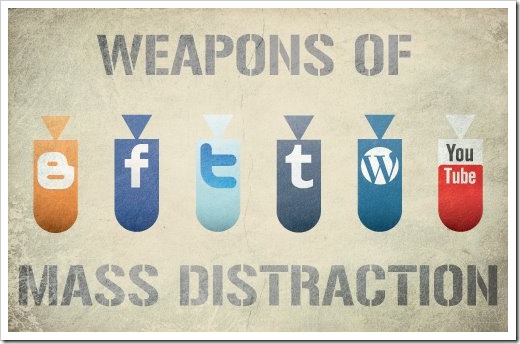
Welcome to the 21 Century! A time period defined by its distractions, whether that be social media, Netflix, YouTube, 24 hour News, virtual reality, or video games.

Humans have been distracting themselves since the beginning of recorded human history, whether that be Roman gladiators or Netflix. Distractions can benefit society, allow for people to relax and decompress from the daily stress of life. Distractions themselves are not the problem, it’s the amount of time consumed distracting oneself. We live in a time period where there is an unlimited amount of distraction and entertainment, which becomes addictive. The high from binge-watching Breaking Bad can feel so good at first, but after spending all day on the couch, we feel horrible. This concept is known as diminishing returns. Diminishing returns is when adding more of an activity actually decreasing the amount of return. For example, 1 alcoholic beverage might bring joy but 20 drinks could lead to alcohol poisoning, at some point consuming more alcohol led to an adverse effect. The phrase “Less Is More” seems fitting.

With freedom, comes responsibility. 

We have the freedom to spend most of our waking time on Netflix while only eating Butterfingers, Taco Bell, and Coors Light. I truly believe that we are blessed and cursed with this freedom. It is a blessing to live in a country where you can choose your own path, express yourself, and consume what you want without Government control. I’m very grateful for this freedom but with this freedom comes responsibility for us to regulate our habits and behaviors. I don’t think most of us have been taught self-control because our culture of consumerism frowns upon self-restraint and responsible living. The rise of Minimalism is a direct response to this culture of unsustainable consumption. We have to regulate our two most valuable commodities, time and attention. We only have a finite amount of time and attention so we must choose wisely how we spend it. It saddens me how much time I have spent on social, media, Netflix, and watching sports when I could have been contributing, growing, and spending time with people that I love.

It’s not about cutting out all these distractions, but regulated and deciding what brings value to your life. Write down what your activities are throughout the week and you will how much time you spend distraction yourself. Here is an example.

Activities Per Week

Current                              Vision

Netflix  10 hours              Netflix 2 hours

Youtube 5 hours               YouTube 1 hour

Facebook 4 hours         Facebook 2 hours

Football 6 hours           Football  4 hours

Family 3 hours             Family 12hours

Passions 1 hour           Passions  10 hours

It’s not about cutting everything our life but regulating the distractions so they don’t make up a majority of our free time. What we are passionate about will thrive if we cut out the excess of distractions. Without the endless distractions, we can spend more time connecting with our family, friends, and significant others. Our life will have more meaning and less emptiness.

We all have the same 24 hours, let’s make the best use of it.

With Aloha,

Johnny Hoffman


Impermanence: The Beauty of Decay, Death, and Transformation.

I know death is a hard topic to discuss. We tend to avoid it out of fear even though we logically know that everything is impermanent. I’m grateful for life and death. There can’t be one without the other. 

You and I will die. The Earth will die. Our Sun will die. Our Solar System will die. The Universe will die.

Well at least in our conventional sense of death….

The First Law of Thermodynamics states that energy can neither be created nor destroyed; energy can only be transferred or changed from one form to another.

If energy can neither be created nor destroyed then we are infinite. The matter that makes up our body has been around since the dawn of the Universe and it will live on for infinity after we die. On a cellular level, we are constantly transforming, with old cells dying and new cells being born every second.

The Zen Master Thich Nhat Hanh and many other Buddhist teachers talk about the laws of Physics in their discussions about death, life, and impermanence. Impermanence is one of the key principles of Buddhism and many Buddhist’s meditate over their own death. Why not prepare for the inevitable? It’s one of the few things we are guaranteed.

Be grateful for death, without it we wouldn’t be alive. Just think of the approximately 108 Billion people who have lived and died on Earth. The Billions of Dinosaurs that had to die for us to eventually evolve into conscious species. A supernova (death of a star) creating the matter for our Sun, Earth, and Solar system to be created. Without the death of our ancestors, we would not be alive and our death will allow other humans to get a chance at life.

Without death, there is no life.

Thich Nhat Hanh’s teaching’s discussed that there is no birth or death, just transformation. You and I are a transformation of our parent’s DNA, and our bodies are a mixture of elements that have been transformed into a conscious human being. We are not full of human but full of elements like oxygen, carbon, and hydrogen.

Many of us walk around as if we live forever. We all logically know our own death but choose to ignore it. We assume that we will get old and deal with it then even though we could die any minute. This is all a delusion that is motivated by fear. If we fully embrace impermanence today we can live our life full of gratitude, love, and freedom. Without the fear of death, we can fully enjoy life. Freedom from the fear of death is a great feeling, one that I try to cultivate in my meditations.

I know this topic is hard to discuss and I thank you for reading this blog post. My intention is not to be sad or dark, but to bring light to the darkness. To change our perspective on death from one of fear to love and from anger to gratitude. 

With Aloha,

Johnny Hoffman


Tending Our Own Garden: Focusing our Energy on Self-improvement. 


Tending our own garden is to focus our energy on what we can do to make our life better. Over my own life, I have spent countless hours worrying about other people lives. I thought I was helping others but what I was really doing was neglecting my own life. I also realized that people will change in their own time and that meddling in other peoples lives is both a waste of energy and can ruin friendships. I truly believe that people love positive changes but hate being changed by others. We know this intuitively when we see the joy in someones face when they lose weight or learn a new skill. The two most valuable commodities in our lives are time and attention. If we spend our time and attention on meddling in others lives, we lose out on living our own life.

Like I have said before, we must become the beacon of light for others to follow. For example, if we want others to eat a healthy and nutritious diet we have to first evaluate our own diet and see how we can improve it. Let’s focus our energy on fulfilling our potential with the wisdom that others will follow suit in their own time. Forcing others to change is unskillful because it usually alienates people, sometimes pushing them further away from your advice.

Flowers only bloom when they are ready. People are the same way. You cannot rush or force them to open just because you think it’s time. Be patient.”      -Timber Hawkeye

Be patient. Focus on your life. Accept others how they are today and not how they should be according to your standards.

With Aloha,

Jonathan Hoffman

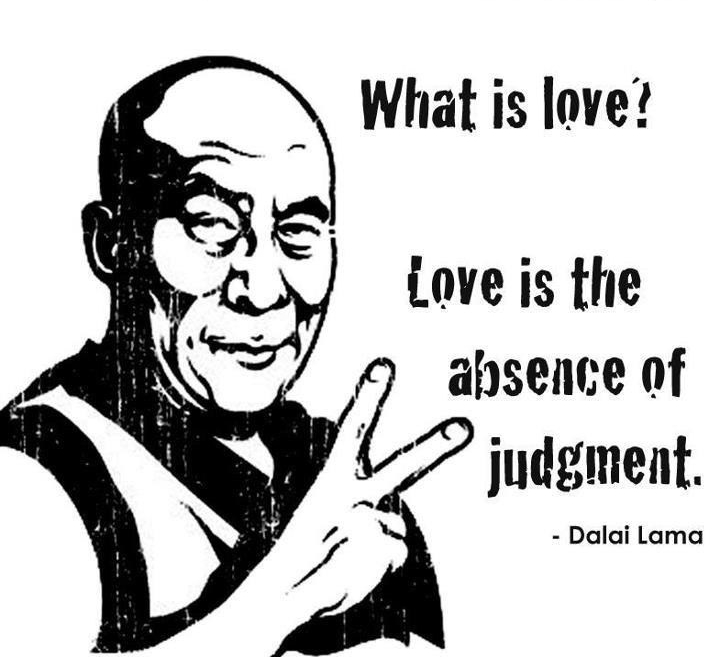
What is Love?

Love does not judge.

Love is not obsessed, attached, or needing of monetary reward.

Love does not keep score.

Love is freeing and open.

Unconditional love forgives even the worst of actions. This doesn’t mean you have to tolerate harmful behavior or allow that person in your life. You can unconditional love someone without them being part of your life. 

Love can soothe hatred & fear.

Love is all you need.

“Love in such a way that the person you love feels free.”

-Thich Nhat Hanh

With Love,

Jonathan Hoffman


Lessons from Tyler Durden: You are Much More Than a Job. 

You’re not your job. You’re not your bank account. You’re not defined by what car, house or clothes you buy….

We are much more than a vocation, object or label. Our life is defined by how we treat ourselves, others, and nature.

On the surface, the movie Fight Club seems like another violent movie about men fighting and terrorizing a city BUT it is so much more than that. I hear minimalists, Buddhists, and spiritual writers quote Fight Club and list it as their favorite movie. Dig a little deeper than the surface and the true meaning of the movie is obvious; the internal fight within all human beings. It’s about the struggles of consumerism and the empty void it brings when we get attached to objects as if they were sentient beings. It depicts the struggle of working a job you hate to buy things you don’t need to impress people who you don’t like.

I’m not saying that we should throw away all our stuff and live a life of a monk! I want to share a middle path between rampant consumerism and deprivation. A path that you can call minimalism, intentional living, and/or simple living. A life not held back by a huge hoard of knick knacks, storage units, and thousands of items that have no purpose or function in the home. A life that you don’t need to work that job you hate to afford the items that don’t bring lasting happiness to your life.

Fight Club depicts the dangers of attachment to impermanent objects while showing the inner struggle of finding meaning in a world obsessed with meaninglessness. Most of us want to find meaning in this world. We want to live with a purpose, passion, and feel like we left our small imprint in the world. I’m here to share my experience that attachment to material objects, jobs, and money has not led to a meaningful life for me.

With Aloha,

Jonathan Hoffman